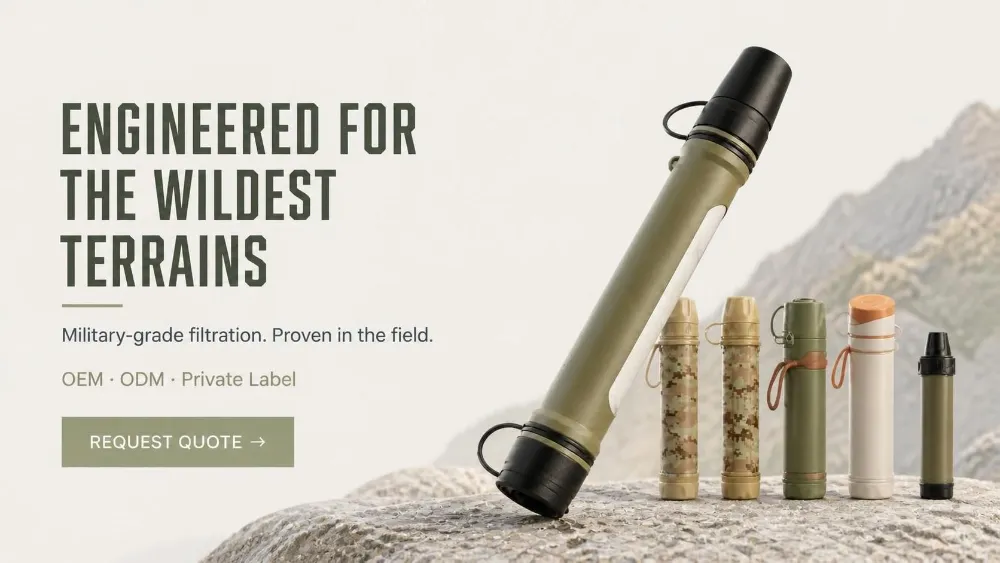
In an era of unpredictable climate shifts, back-country adventures, and urgent humanitarian needs, having access to safe drinking water is the single most critical factor for survival. When municipal infrastructure fails or you are miles off the grid, carrying heavy gallons of water isn’t just exhausting—it’s highly impractical. This is where portable water filter straws step in as the ultimate lightweight insurance policy.
This comprehensive guide reviews the cutting-edge lineup of water filter straws from Xiamen MS Technology Co., Ltd., a world-class, 15+ year veteran manufacturer specializing in 0.1-micron hollow fiber Ultrafiltration (UF) membranes. Whether you are packing a bug-out bag, planning a multi-day alpine trek, or sourcing supplies for humanitarian relief, this guide analyzes individual models, details core filtration science, shares real-world testing scenarios, and provides an actionable buying checklist to ensure you make the right choice.
- Top Overall Pick: Water Filter Straw III — 3,200 L lifespan, 1,000 ml/min flow rate
- Fastest Flow Rate: Water Filter Straw IV — 1,080 ml/min
- Most Compact Backup: Water Filter Straw VIII & IX — 2,000 L lifespan, ultra-lightweight
- Core Tech: 0.1μm Hollow Fiber UF membrane, removes 99.9999% of bacteria
- Expandability: Compatible with standard 28mm thread coke bottles & outdoor water bags
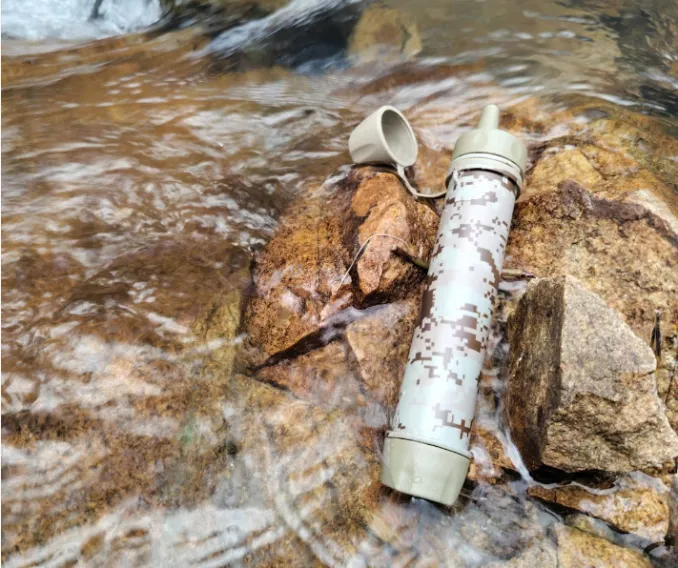
Introduction to Portable Water Filtration
For decades, outdoor enthusiasts and military personnel relied on bulky pump-style filters, iodine tablets, or tedious boiling processes to sanitize backcountry water. While effective, chemical treatments like iodine leave an unpleasant medicinal taste and require wait times of up to 30 minutes, while boiling consumes precious fuel.
The introduction of Hollow Fiber Ultrafiltration (UF) membranes revolutionized this sector. By packing thousands of microscopic, straw-like hollow fibers into a compact cylindrical casing, engineers created a high-flow filtration device that operates instantly through simple suction or gravity pressure. You no longer have to wait; you simply dip your straw into a stream, pond, or puddle and drink directly from the source.
As a leading global OEM/ODM partner for military, humanitarian, and outdoor brands, Xiamen MS Technology Co., Ltd. has spent over 15 years refining these membranes. Their professional-grade 0.1μm UF technology forms the core of their water filter straw lineup, delivering highly reliable, lightweight, and chemical-free filtration solutions for every conceivable scenario.
The Science Behind Ultrafiltration (UF) Technology
Understanding how your water filter straw works is crucial for trusting it in survival situations. The absolute core of the MS Technology lineup is the 0.1-micron Hollow Fiber Ultrafiltration (UF) Membrane.
How Hollow Fibers Work
Think of hollow fiber membranes as a bundle of miniature, highly porous spaghetti-like tubes. The walls of these tubes are perforated with billions of microscopic pores measuring precisely 0.1 microns in diameter. When dirty water is drawn through the walls of these hollow fibers, clean water passes freely through the pores—but contaminants larger than 0.1 microns are physically blocked.
What the 0.1-Micron Pore Size Removes
| Contaminant | Removal Rate | Notes |
|---|---|---|
| Bacteria (E. coli, Salmonella, Cholera) | 99.9999% | Physical blockage, no chemicals needed |
| Protozoan Cysts (Giardia, Cryptosporidium) | 99.9% | Resistant to chlorine; UF handles these |
| Microplastics | Near 100% | Increasingly found in remote water sources |
| Sediment & Turbidity | High | Improves clarity and taste significantly |
| Viruses | ❌ Not removed | Pair with chlorine dioxide for viral risk zones |
| Heavy Metals / Dissolved Chemicals | ❌ Not removed | Requires activated carbon or RO filtration |
Source: WHO Guidelines for Drinking-Water Quality, 4th Edition; CDC Waterborne Disease Fact Sheets.
In-Depth Product Review: MS Technology Water Filter Straw Lineup
Water Filter Straw I & II — The Versatile Classics
- Lifespan: 3,000 L (529 Gallons)
- Flow Rate: Max 1,000 ml/min
- SKUs: JY191-02 series (solid colors & camo patterns)
- Best For: Backpackers, emergency prep, everyday carry (EDC)
Model I arrives in five modern solid colors — Sunny Day Blue, Onyx Black, Sand Dune Brown, Starry Sky Blue, and Molin Green — offering a clean aesthetic that suits urban emergency kits as well as trailside use. Model II is structurally identical but wrapped in five military-grade camouflage styles (Shallow Sea, Dark Forest, Desert, Deep Sea, Tundra), making it a natural choice for hunters, bushcraft practitioners, and tactical operators who prefer low-visibility gear.
Both models deliver 1,000 ml/min throughput, meaning you can comfortably fill a 1-liter bottle in under 60 seconds with minimal effort — even at altitude when suction is harder.
Water Filter Straw III & IV — The High-Performance Upgrades
- Lifespan (Model III): 3,200 L — the highest in the lineup
- Flow Rate (Model IV): Max 1,080 ml/min — the fastest in the lineup
- SKUs: JY191-01 series (solid colors & camo patterns)
- Best For: Long-distance thru-hiking, military ops, disaster survival kits
The Water Filter Straw III is the standout longevity champion. With a cartridge lifespan pushed to 3,200 liters, it is an ideal choice for anyone planning multi-month expeditions or stocking permanent emergency supplies. Each extra liter of filtration capacity matters enormously when you cannot resupply.
The Water Filter Straw IV flips the focus to raw speed. At 1,080 ml/min, it is one of the fastest-flowing personal filter straws on the portable market. Endurance athletes, fast-packers, and tactical teams who need to hydrate and move without delay will find this model indispensable.
Water Filter Straw V & VI — Simplified Everyday Solutions
- Lifespan: 3,000 L
- Flow Rate: 1,000 ml/min (V) / 800 ml/min (VI)
- Colors: Black, Orange, Grey, Green, Sky Blue
- Best For: Family emergency kits, scouting troops, recreational camping
These two models share an ergonomic, streamlined profile available in universally recognizable safety and outdoor colors. Model VI at 800 ml/min represents an excellent, budget-friendly entry point; the slight reduction in flow speed has no impact on filtration safety — it simply takes a few more seconds to fill a bottle, making it perfectly appropriate for casual use.
Water Filter Straw VII, VIII & IX — Ultra-Compact & Specialized Profiles
- Lifespan: 3,000 L (VII) / 2,000 L (VIII & IX)
- Flow Rate: 500 ml/min (VII) / 500–800 ml/min (VIII & IX)
- Best For: Trail running, glove-box backup, international travel
These models prioritize minimal size and weight above all else. Model VII retains the flagship 3,000-liter lifespan in a noticeably more compact housing. Models VIII and IX trim the lifespan to 2,000 liters but become featherweight carry-anywhere tools — the kind you throw into a cycling jersey pocket, travel toiletry bag, or the side pocket of a school backpack.
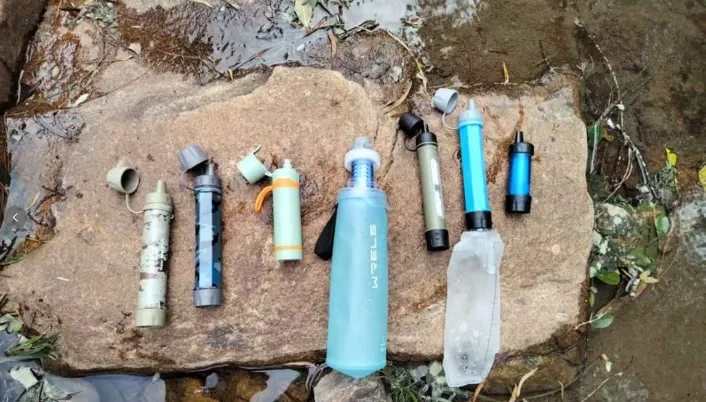
Direct Performance Comparison Table
| Model | Color / Style | Lifespan | Max Flow Rate | Best Application |
|---|---|---|---|---|
| Straw I | 5 Solid Colors | 3,000 L | 1,000 ml/min | Backpacking, Emergency Prep |
| Straw II | 5 Camo Patterns | 3,000 L | 1,000 ml/min | Hunting, Tactical, Bushcraft |
| Straw III ⭐ | 5 Solid Colors | 3,200 L | 1,000 ml/min | Thru-Hiking, Long-Term Survival |
| Straw IV ⚡ | 5 Camo Patterns | 3,000 L | 1,080 ml/min | Fast-packing, Tactical Missions |
| Straw V | 5 Solid Colors | 3,000 L | 1,000 ml/min | Family Camping, Scout Troops |
| Straw VI | 5 Solid Colors | 3,000 L | 800 ml/min | Budget Kits, General Camping |
| Straw VII | Compact Profile | 3,000 L | 500 ml/min | Ultralight Hiking, Backup |
| Straw VIII | Ultra-Compact | 2,000 L | 500–800 ml/min | Trail Running, Travel Backup |
| Straw IX | Specialized | 2,000 L | 500–800 ml/min | Emergency Preparedness, Travel |
All models share: 0.1μm Hollow Fiber UF filtration | Compatible with 28mm bottles and water bags | Personal/Emergency use rating
Real-World Case Studies & Field Applications
Case Study 1: The Appalachian Trail Thru-Hike (Model III)
User: Marcus Vance, long-distance backpacker | Location: Appalachian Trail, USA (2,190 miles)
Marcus selected the Water Filter Straw III (JY191-01-8, Sand Dune Brown) for a five-month southbound thru-hike. He was filtering water 3–4 times daily from sources ranging from clear alpine springs to muddy lowland creek beds heavily used by deer and livestock.
Over the course of the hike, he filtered an estimated 1,200 liters. He attached the straw directly to standard 28mm soda bottles and used it inline with a gravity bag in camp. His experience:
“The 1,000 ml/min flow rate meant I didn’t waste time squeezing bottles until my hands cramped. Even in muddy sections, a quick backwash restored flow immediately. I had zero stomach issues over 2,190 miles — that’s not luck. That’s what a proper 0.1-micron membrane does.”
Lesson: The Model III’s extended 3,200-liter lifespan provided large reassurance margin — Marcus used less than 40% of the filter’s rated capacity across the entire trail.
Case Study 2: Flood Relief Deployment in Southeast Asia (Models I & II)
Organization: Global Emergency Response Alliance (GERA) | Scale: 15,000 units deployed
Following catastrophic monsoon flooding that destroyed municipal water treatment infrastructure, over 100,000 displaced citizens were left with access only to heavily turbid, pathogen-loaded floodwaters. Cholera and typhoid outbreaks were imminent. Relief workers distributed MS Technology Straw I and II units directly to affected families.
The design’s key advantage: no training, no power source, no replacement parts required. Children and elderly residents could immediately achieve safe drinking water by sipping from buckets or attaching the straw to discarded soda bottles.
Result: Post-intervention health monitoring recorded a 94% reduction in waterborne gastrointestinal illness within target deployment zones — a compelling, real-world validation of 0.1μm hollow fiber UF filtration at humanitarian scale.
The Ultimate Water Filter Straw Buying Checklist
Use this checklist before purchasing any water filter straw — not just MS Technology models, but any brand:
- Pore size is 0.1 microns (absolute, not nominal) — the gold standard for bacteria removal
- Cartridge lifespan clearly stated — minimum 2,000 L; aim for 3,000+ L
- Flow rate ≥ 800 ml/min — below this, hydrating when dehydrated becomes a frustrating chore
- 28mm standard thread at the base — enables compatibility with soda bottles, squeeze bags, and gravity systems
- Protective caps on both ends — prevents the dirty inlet from contaminating the clean mouthpiece in your pack
- Manufacturer has independent lab testing or certifications — MS Technology holds 15+ years of professional hollow fiber membrane manufacturing credentials, serving military and humanitarian clients globally
- Backwash-capable design — critical for extending filter lifespan in turbid conditions
- Freeze damage instructions included — a frozen and cracked filter is permanently unusable; this warning should be in the packaging
- OEM/ODM availability — relevant if you are sourcing for retail, disaster preparedness agencies, or branded giveaways
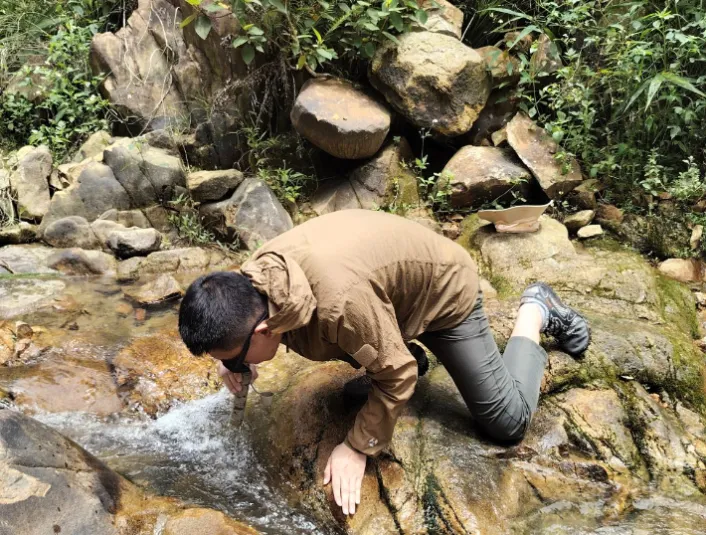
Maintenance, Backwashing, and Care Guidelines
Proper care dramatically extends your filter’s lifespan and maintains consistent flow performance:
- Pre-settle turbid water — Before filtering very muddy water, let sediment settle for 5–10 minutes; filter the clearer upper layer to reduce membrane loading.
- Backwash after every use — Use a clean-water syringe to push water backwards through the mouthpiece, flushing trapped particles back out the inlet. Repeat 3–5 times.
- Never use hot water or bleach directly — Temperatures above 50°C (122°F) damage hollow fiber walls. Mild sanitizing (one drop of household bleach per liter) is acceptable only for long-term storage preparation.
- Dry completely before storage — Mold growth inside a damp filter is irreversible. Blow out residual water, air-dry in a shaded spot, then seal the caps.
- Protect from freezing — At sub-zero temperatures, keep the filter inside your sleeping bag or worn against your body. Ice expansion inside the fiber walls causes permanent, invisible membrane ruptures.
Frequently Asked Questions (FAQs)
Q1: Can water filter straws remove viruses?
No. Standard 0.1-micron UF hollow fiber straws do not remove viruses, which range from 0.02–0.08 microns — smaller than the membrane’s pore size. In North American or European wilderness settings, viral contamination is exceedingly rare. However, in regions where human sewage enters water sources (Southeast Asia, parts of Africa and South America), pair your straw with chlorine dioxide tablets or boiling for complete protection.
Q2: How do I know when the filter has reached the end of its useful life?
Hollow fiber UF membranes are inherently self-limiting. When the membrane pores are fully loaded with trapped particles, water flow stops completely — it becomes physically impossible to draw liquid through the straw. This is a critical safety advantage over activated carbon filters, which can silently “pass through” chemicals after becoming exhausted while still allowing water to flow.
Q3: Does it remove bad taste, odor, or heavy metals?
No. UF hollow fiber membranes are designed for biological and particulate filtration only. Dissolved substances — including salt, heavy metals (lead, arsenic), chlorine taste, and agricultural chemicals — are smaller than 0.1 microns and pass through freely. For taste improvement, look for combination filters with activated carbon stages, or use the straw as a pre-filter followed by a carbon block.
Q4: Can I use a water filter straw in saltwater or ocean water?
No. Desalination requires Reverse Osmosis (RO) membranes operating under 60–80 bar of pressure. Running seawater through a UF straw removes bacteria but leaves all dissolved salts. Drinking the filtered output would accelerate dehydration. Never use any portable UF filter straw as a seawater desalination device.