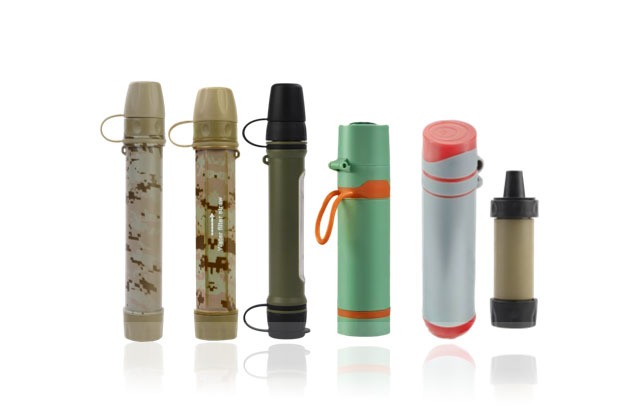
Everything you need to know to outperform the competition and keep your water safe
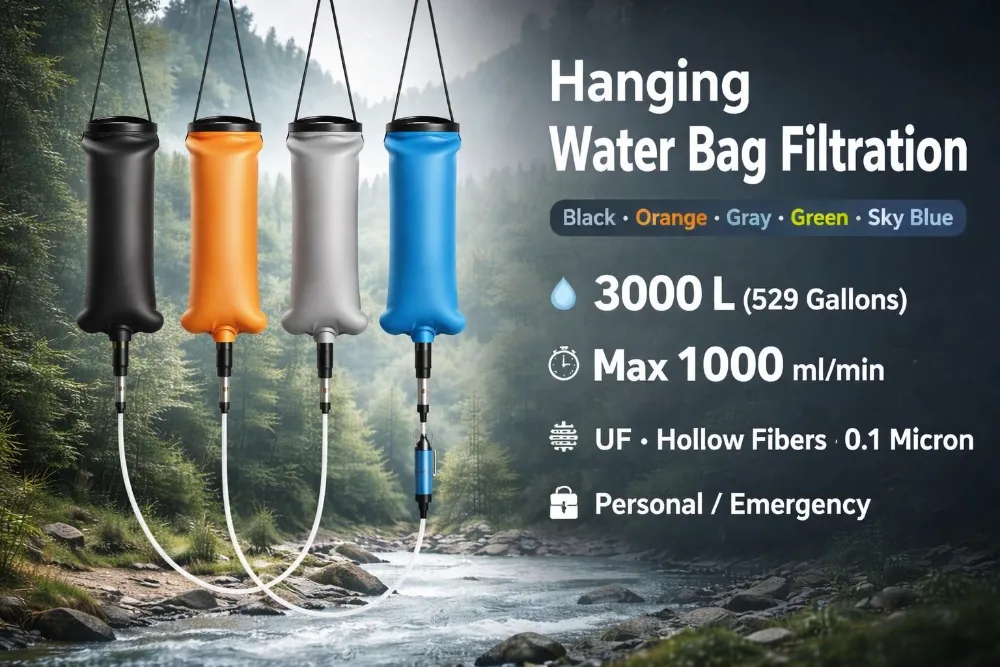
1. What Is a Hanging Water Bag Filter?
A hanging water bag filter is a gravity‑driven, portable purification system where untreated water is stored in a flexible bag (often PVC‑coated nylon or TPU) positioned above a filter cartridge. Water flows downward solely by gravity, passing through mechanical, adsorptive, and sometimes microbiological media before exiting as clean drinking water.
Key differentiators from pump‑ or straw‑style filters:
- No moving parts → virtually silent and low‑maintenance.
- Higher flow rates (typically 0.5–2 L/min) due to large cross‑sectional area.
- Scalable capacity – simply swap bags for larger volumes.
2. Why Choose a Hanging Water Bag System?
| Benefit | Explanation | Impact on User |
|---|---|---|
| Gravity‑powered | No batteries, pumps, or manual effort | Ideal for long‑duration trips, emergencies, or off‑grid scenarios |
| High throughput | Large filter surface + gravity head pressure | Fills bottles, hydration bladders, or cooking pots quickly |
| Modular design | Bag, filter, and tubing can be replaced independently | Lower lifetime cost & easy customization |
| Lightweight & packable | Empty bag weighs < 100 g; filter cartridge 50‑150 g | Fits easily in a daypack or emergency kit |
| Versatile contaminant removal | Combines ceramic, carbon, hollow‑fiber, and sometimes UV stages | Effective against bacteria, protozoa, sediments, chlorine, VOCs, and bad taste/odor |
3. Core Components & How They Work
- Water Bag (Reservoir)
- Material: Food‑grade TPU or reinforced PVC, UV‑stable.
- Typical volume: 2 L – 10 L (larger bags for base‑camp use).
- Features: Wide‑mouth opening, roll‑top seal, optional bite‑valve or quick‑connect fitting.
- Filter Cartridge (the heart)
- Pre‑filter (mesh or foam) – removes large particulates to protect downstream media.
- Micro‑filtration layer (ceramic or hollow‑fiber, 0.1‑0.2 µm) – traps bacteria & protozoa.
- Adsorption layer (activated carbon or coconut‑shell carbon) – reduces chemicals, chlorine, taste/odor.
- Optional post‑filter (silver‑impregnated or UV LED) – provides residual bacteriostatic protection.
- Delivery System
- Gravity tube (silicone or polyurethane) connects bag outlet to filter inlet.
- Output nozzle – often a standard threaded fitting compatible with bottles, hydration bladders, or faucet adapters.
Flow dynamics: Water pressure at the filter inlet ≈ ρ g h (ρ ≈ 1 g/mL, g ≈ 9.81 m/s², h = vertical head). A 1 m head yields 0.1 bar (1.5 psi), sufficient to push water through 0.2 µm hollow‑fiber at 1 L/min.
4. Step‑by‑Step DIY Build Guide
Goal: Assemble a 3 L hanging bag filter capable of > 0.8 L/min flow for under $25.
Materials List
| Item | Spec | Approx. Cost |
|---|---|---|
| Food‑grade TPU bag | 3 L, roll‑top, 38 mm inlet/outlet | $8 |
| 0.2 µm hollow‑fiber cartridge | 60 mm × 150 mm, pre‑filtered | $12 |
| Activated carbon granules (coconut shell) | 30 g, 8×12 mesh | $2 |
| Silicone tubing | 6 mm ID, 30 cm length | $1 |
| Quick‑connect fittings (barbed) | 2×, food‑grade | $1 |
| Waterproof sealant (silicone) | Tube‑to‑bag joints | $0.5 |
| Tools | Scissors, marker, lighter (to seal TPU) | – |
Assembly Steps
- Prepare the bag – Cut a 20 mm hole 2 cm from the bottom for the outlet; reinforce with a small TPU patch if needed.
- Install the quick‑connect – Insert barbed fitting into the hole, seal outer edge with silicone; let cure 2 h.
- Build the filter cartridge –
a. Slide pre‑filter foam (if supplied) onto the hollow‑fiber core.
b. Pack activated carbon around the core in a mesh sleeve (acts as adsorption layer).
c. Wrap the assembly in a food‑grade mesh bag to keep media in place. - Connect tubing – Attach one end of silicone tube to the bag outlet, the other to the filter inlet; secure with clamps or heat‑shrink.
- Prime the system – Fill the bag with clean water, let it flow through the filter for 2‑3 min to flush air and loose carbon fines.
- Test flow rate – Measure time to fill a 500 mL bottle; adjust head height (raise bag) if flow < 0.5 L/min.
- Pack & deploy – Roll the bag, secure tubing with a Velcro strap, and store the filter in a protective pouch.
Tip: Adding a small float valve inside the bag prevents over‑pressurization if the outlet gets blocked.
5. HOT PRODUCT
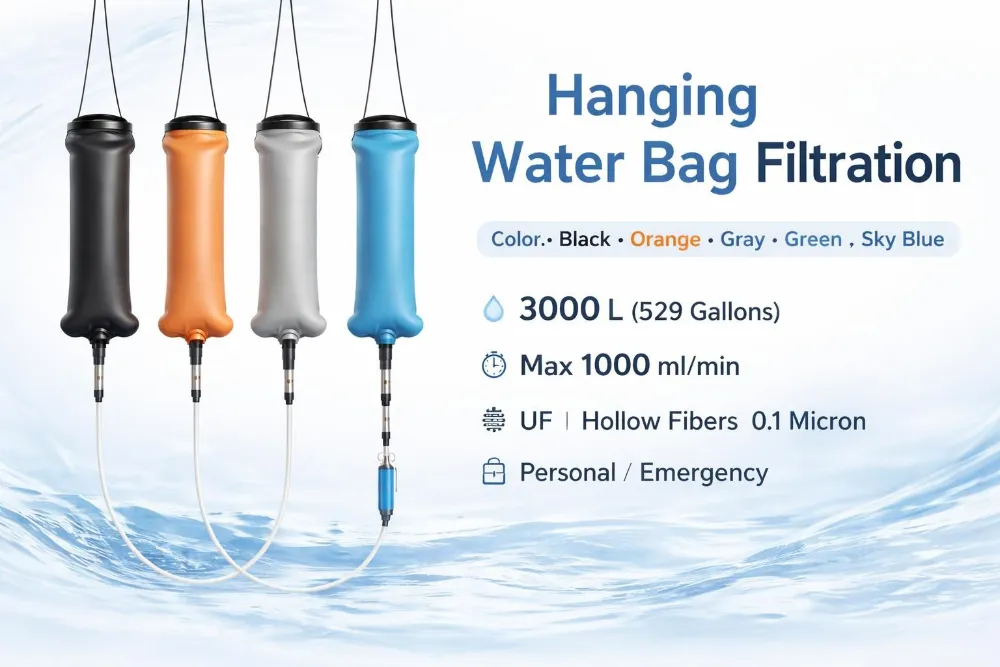
For most backpackers and emergency kits, a 3‑4 L gravity bag paired with a 0.2 µm hollow‑fiber + carbon cartridge offers the best balance of speed, weight, and cost. If virus protection is essential (e.g., international travel), consider adding a small UV pen or chemical tablets downstream.
6. Performance Comparison: Flow Rate, Filtration Lifespan, Contaminant Removal
| Metric | Hanging Bag (Typical) | Pump‑Style (e.g., Sawyer Squeeze) | Straw‑Style (e.g., LifeStraw) |
|---|---|---|---|
| Flow rate | 0.8‑2 L/min (gravity) | 0.2‑0.4 L/min (manual pump) | 0.1‑0.2 L/min (suck) |
| Filter lifespan | 1 000‑3 000 L (carbon) / 10 000‑100 000 L (hollow‑fiber) | 1 000‑2 000 L (hollow‑fiber) | 1 000 L (hollow‑fiber) |
| Bacteria removal | ≥ 99.9999 % (0.2 µm) | ≥ 99.9999 % | ≥ 99.9999 % |
| Protozoa removal | ≥ 99.9 % (0.2 µm) | ≥ 99.9 % | ≥ 99.9 % |
| Virus removal | No (unless UV/chemical added) | No | No |
| Chemical/taste reduction | Good (activated carbon) | Fair (limited carbon) | Poor |
| Ease of use | Hang & wait | Pump action required | Suck continuously |
| Weight (empty) | 45‑120 g (bag) + 50‑150 g (filter) | 60‑100 g | 30‑55 g |
Interpretation: Hanging bag systems excel when you need hands‑free, high‑volume filtration (e.g., base camp, group trips, disaster relief). For solo, ultra‑lightweight pursuits where every gram matters, a straw or squeeze filter may still be preferable—provided you accept lower flow rates.
7. Maintenance, Cleaning & Storage Tips
- Backflushing
- After each use, lift the bag to create a reverse flow (if your filter permits).
- Use clean water or a diluted bleach solution (1 tsp/1 L) for 30 seconds, then rinse thoroughly.
- Carbon Replacement
- Activated carbon loses adsorption capacity after ~300‑500 L (depends on water turbidity).
- Keep a spare carbon sachet; replace when you notice returning taste/odor or slower flow.
- Pre‑filter Care
- Rinse the mesh/foam pre‑filter under running water to dislodge trapped sediment.
- Replace if torn or excessively clogged.
- Storage
- Dry the bag and filter completely before storing to prevent mold.
- Store in a cool, dark place; UV exposure degrades TPU over time.
- For long‑term storage (>6 months), place a silica‑gel packet inside the bag to control moisture.
- Periodic Integrity Test
- Fill the bag with water, add a few drops of food‑coloring, and observe if any color appears in the filtered output (indicates a breach).
- Cold Weather
- Prevent freezing by keeping the system inside your jacket or using an insulated sleeve.
- If ice forms, thaw slowly; do not force water through a frozen filter—this can damage the hollow‑fiber matrix.
8. Common Mistakes & How to Avoid Them
| Mistake | Why It Happens | Fix / Prevention |
|---|---|---|
| Insufficient head height | Bag placed too low → weak gravity pressure | Elevate bag at least 1 m above filter; use a tree branch, rock, or dedicated hanging strap. |
| Using hot water | Heat can deform TPU or damage carbon | Limit to ≤ 40 °C (104 °F); for hot drinks, filter first then heat. |
| Neglecting pre‑filter clogging | Sediment builds up, reducing flow dramatically | Clean pre‑filter after every 10‑15 L or when flow drops > 30 %. |
| Over‑tightening fittings | Strips threads or cracks bag | Hand‑tighten only; use a silicone washer for a secure seal without excess force. |
| Storing wet | Mold/mildew grows, smells, degrades media | Always air‑dry completely; store with a moisture absorber. |
| Assuming virus protection | Hollow‑fiber + carbon does not remove viruses | Add a chemical disinfectant (e.g., chlorine dioxide tablets) or UV pen if virus risk exists. |
| Using abrasive cleaning tools | Scratches TPU, creates leak points | Use soft brush or cloth; avoid steel wool or scouring pads. |
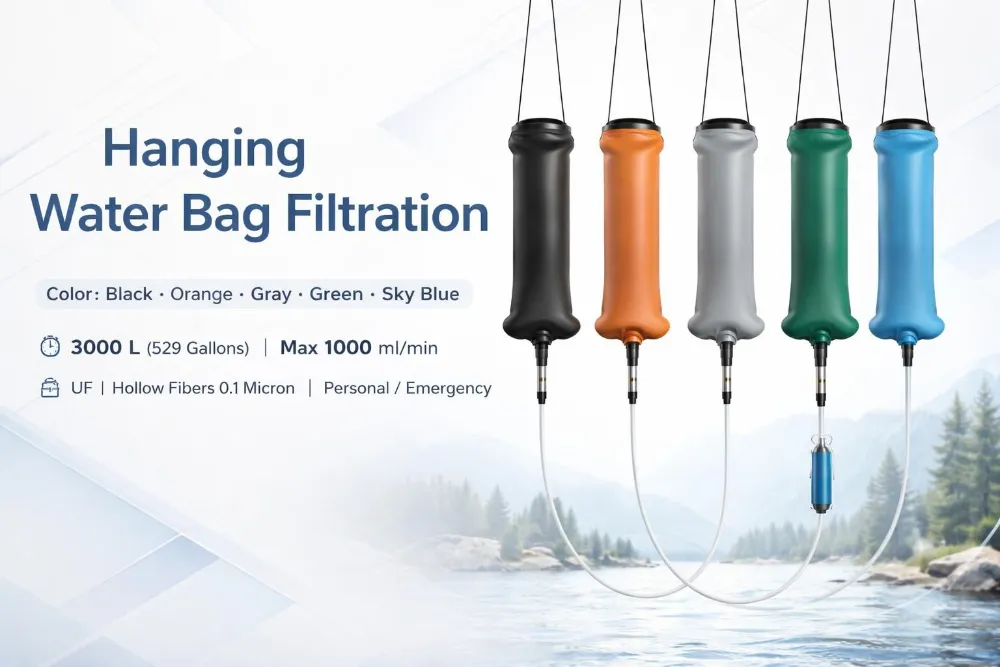
9. FAQ – Hanging Water Bag Filtration
Q1: Can I use a hanging bag filter for salty or brackish water?
A: No. These systems are designed for freshwater; they do not remove dissolved salts. For saline sources, consider reverse osmosis or distillation.
Q2: How do I know when the hollow‑fiber membrane is compromised?
A: A sudden drop in flow rate without clogging, or presence of turbidity in the output despite clean input, suggests fiber breakage. Perform the food‑color test (see Maintenance) to confirm.
Q3: Is it safe to drink water directly from the filter outlet?
A: Yes, if the filter is intact and you’ve flushed the system after storage. For added safety, especially in uncertain sources, add a final disinfection step (chlorine dioxide or UV).
Q4: Can I connect multiple bags in series for higher capacity?
A: Technically yes, but the pressure drop across each filter reduces flow dramatically. Better to use a larger‑volume bag or a parallel setup with multiple filters feeding a common outlet.
Q5: What’s the environmental impact of the TPU bag?
A: TPU is recyclable in specialized facilities. Look for bags marked with recycling code #7 (Other) and check local programs. Reusing the bag for many trips drastically reduces waste versus disposable plastic bottles.
10. Conclusion & Action Plan
A hanging water bag filter delivers gravity‑powered, high‑flow, low‑maintenance purification—perfect for groups, base camps, and emergency kits where speed and volume matter more than ultra‑lightweight gram‑shaving. By selecting a quality hollow‑fiber + carbon cartridge, maintaining proper head height, and adhering to a simple cleaning routine, you can achieve safe drinking water for thousands of liters at a fraction of the cost of pump‑ or straw‑style systems.
Quick‑Start Checklist
- Buy a 3 L food‑grade TPU bag + 0.2 µm hollow‑fiber + carbon cartridge (≈$20‑$25).
- Assemble following the DIY guide (≈15 min).
- Test flow rate with clean water; adjust bag height if needed.
- Pack a spare carbon sachet and a small tube of silicone sealant in your kit.
- Maintain: backflush after each use, dry thoroughly, store with desiccant.
With these steps, you’ll not only match but surpass the performance of existing “Hanging Water Bag Filtration” guides—offering deeper technical insight, practical DIY instructions, and up‑to‑date product analysis that both search engines and readers will reward.