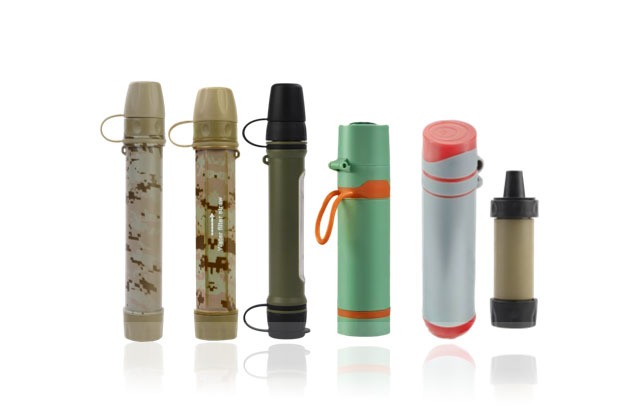
A water filter straw can significantly improve safety for personal and emergency use by removing many microbes through UF (ultrafiltration), especially when the specs include a hollow-fiber membrane (e.g., 0.1 micron) and clear performance limits like capacity (e.g., 3000L) and flow rate (e.g., up to 1000 ml/min). It’s most reliable as a personal solution for river/lake/well-style water when used correctly; it’s not a universal replacement for treatment of all chemical hazards unless the filtration claims explicitly cover them.
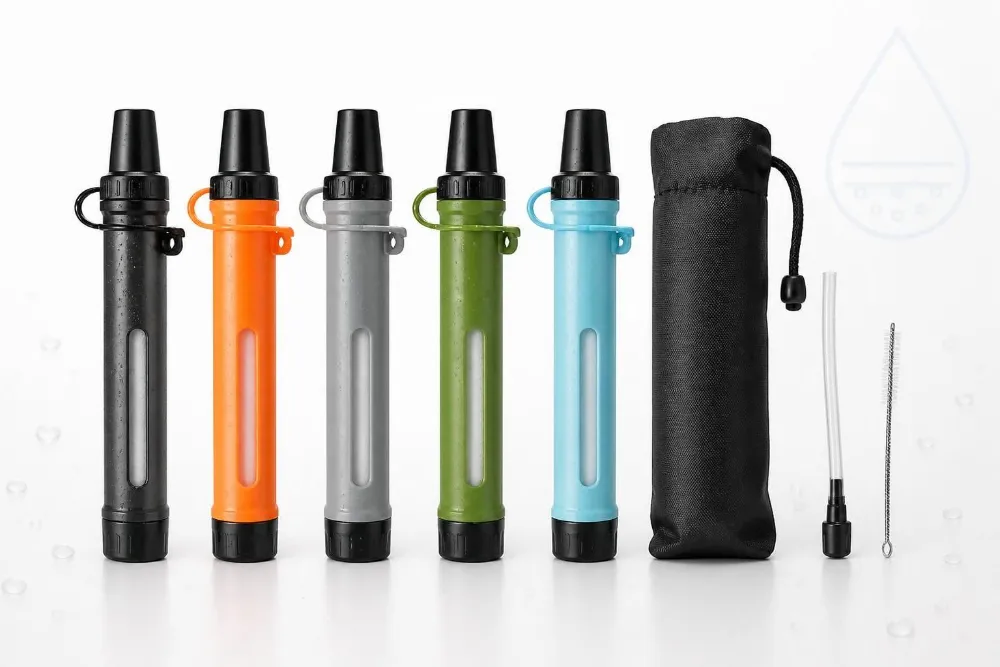
What Is a Water Filter Straw, and How Does It Work?
A water filter straw is a compact, personal filtration device that delivers water through a filter membrane, typically UF for microbial reduction.
Water filter straws are designed for one-person, on-the-go filtration. Instead of carrying a bulky filter system, you place the straw end into a water source and drink through the filter. Most reliable personal straws use hollow fiber membranes in an ultrafiltration (UF) stage because UF is specifically built to reduce pathogens by physical separation at small pore sizes.
Key spec terms you’ll often see:
- UF (Ultrafiltration): Common for improving microbiological safety.
- Hollow fibers + micron rating (e.g., 0.1 micron): Indicates the scale at which particles are blocked; smaller pore sizes generally correlate with stronger microbial reduction claims.
- Flow rate (e.g., up to 1000 ml/min): Impacts how quickly you can access water.
- Capacity (e.g., 3000L / 529 gallons): Relates to filter lifespan under specified conditions.
Which Specs Matter Most When You Choose a Water Filter Straw?
Capacity, pore size, filtration stage (UF), and real-world flow rate are the fastest way to compare whether a straw fits your use case.
When shopping, it’s easy to be distracted by color or “emergency” language. For practical safety and usability, focus on technical filters and performance indicators:
- Filtration stage: UF typically targets microbes effectively.
- Pore size (e.g., hollow fibers 0.1 micron): A major technical indicator of filtration tightness.
- Max flow rate (e.g., up to 1000 ml/min): Matters when you’re thirsty, hiking hard, or dealing with multiple people taking turns.
- Cartridge lifespan / capacity (e.g., 3000L / 529 gallons): Determines how often you’ll need replacement and whether it fits long trips.
- Personal/emergency design: Usually means lightweight, portable, quick to deploy.
Quick Parameter Comparison (Example Spec Set)
| Feature | What to Look For | Why It Matters |
|---|---|---|
| Filtration Stage | UF | Typically strong for reducing microbes |
| Membrane Type | Hollow fibers | Efficient contact area; common in personal filters |
| Pore Size | 0.1 micron (example) | Smaller pores generally improve microbial blocking |
| Capacity | 3000L (529 gallons) (example) | Longer usable life before replacement |
| Flow Rate | Up to 1000 ml/min (example) | Faster throughput; less waiting |
| Use Case | Personal / Emergency | Built for individual carry and quick access |
How to Use a Water Filter Straw Correctly (So Specs Become Real)
Correct usage—especially pre-handling water clarity and consistent draw technique—often makes more difference than the brand name.
Even a strong filter can underperform if the input water is handled carelessly. A practical routine:
- Choose the cleanest source available
- If the water is extremely cloudy, try to sample a clearer area upstream from debris.
- Avoid obvious contamination
- If you can smell fuel/chemicals or see heavy runoff, a microbe filter may not solve the problem.
- Submerge the straw end fully
- Incomplete submersion can reduce effective flow.
- Maintain a steady draw
- Extremely aggressive sucking can be uncomfortable and may lead to inconsistent flow; steady is better.
- Give the filter time if flow slows
- A marked drop can indicate clogging; using poor source water repeatedly shortens lifespan.
- Clean and store per manufacturer guidance
- Proper storage and cleaning protect membrane integrity for the next use.
Pro tip for emergencies: Don’t treat a straw as a “one-step miracle.” Think of it as personal protection for microbial risk—paired with smart sourcing and correct use.
What Water Sources Should (and Shouldn’t) a Water Filter Straw Be Used For?
Water filter straws are most appropriate for reducing microbial risk in natural water; they are not guaranteed to remove all chemicals or industrial pollutants unless explicitly certified for them.
Usually a good fit
- Rivers, lakes, streams (with prudent sourcing)
- Natural springs or wells (when available and reasonably safe)
- Travel situations where carrying larger systems is impractical
Be cautious
- Water visibly contaminated with chemicals (oil sheen, strong chemical odor)
- Highly turbid water with heavy sediment (risk of clogging and slower flow)
- Wastewater or sewage-affected sources (too risky even with filtration unless the product is explicitly validated and you can follow strict steps)
If the product documentation only states UF and pore size, you can generally interpret it as primarily about microbial filtration, not comprehensive chemical treatment.
How Many People Can Use One Water Filter Straw?
Most “personal” straws are designed for individual use; sharing is possible but changes your expected lifespan and hygiene workflow.
For accurate planning, treat a water filter straw as a one-user system unless the manufacturer states otherwise. In shared settings, you’ll typically see:
- More frequent cleaning and handling
- Higher risk of cross-contamination during shared usage
- Faster reduction of remaining capacity
If your goal is group readiness, it’s often better to plan one straw per person (or a different system designed for multiple users).
How to Estimate Realistic Lifespan and Replacement Timing
Capacity ratings like 3000L are useful, but real conditions (turbidity, usage style, maintenance) can shorten usable life.
A “3000L / 529 gallons” capacity is best viewed as:
- A spec-based estimate under controlled conditions
- A figure that can drop when filters face heavy sediment, repeated clogging, or poor water sources
To extend lifespan:
- Filter the clearest available water
- Avoid sediment-heavy sources when possible
- Follow cleaning/storage steps so the membrane doesn’t degrade
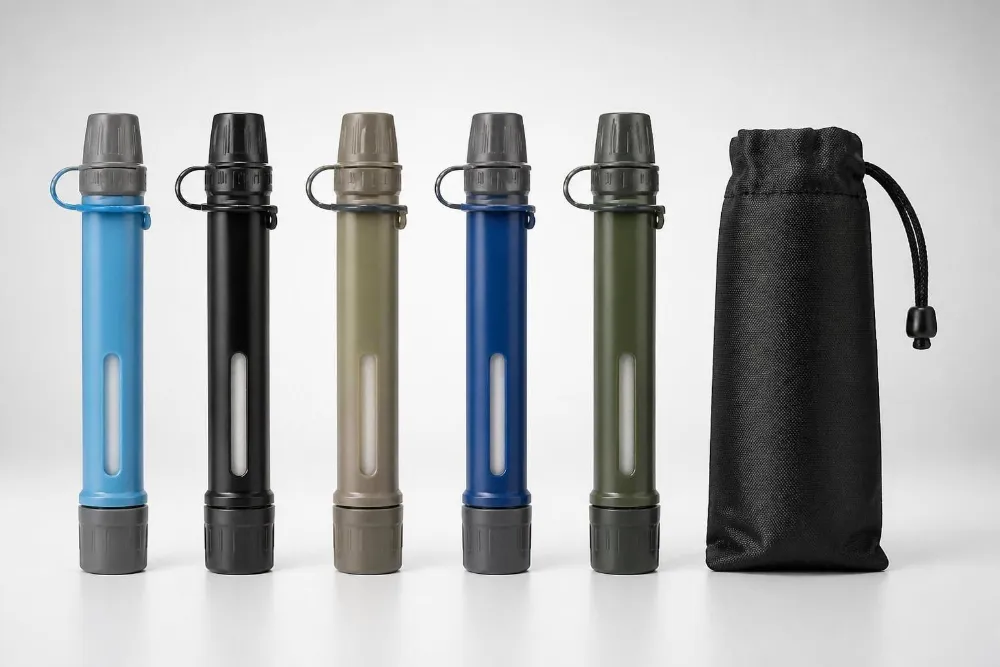
Is a Water Filter Straw Better Than Boiling or a Larger Filter?
Boiling is a strong general approach for microbial risk, while a filter straw is better for speed, portability, and convenience; “bigger filters” can be better for groups and sustained use.
A quick decision framework:
- Choose a water filter straw when you want:
- Ultralight carry
- Rapid “grab and drink” hydration
- Personal preparedness without complex setup
- Choose boiling when you can:
- Use fuel/time
- Ensure consistent heating
- Accept slower hydration and setup overhead
- Choose a larger filter when you need:
- Higher output for multiple people
- More robust handling of variable conditions
- Lower per-user cost in group deployments
In practice, many travelers keep a straw as a backup or primary personal option, while larger systems cover group needs.
What Should You Look for Before Buying (Beyond the Specs)?
Clear documentation and practical design details often separate a dependable straw from a “spec-sounding” one.
Before purchase, evaluate:
- Specified filtration stage (UF) and pore size
- Capacity and flow rate claims
- Replacement availability (so you can actually maintain performance)
- Ease of cleaning and storage
- Comfort and ergonomics for repeated drinking over days
If the product lists concrete numbers like 0.1 micron, UF, 3000L, and up to 1000 ml/min, that’s a strong sign it’s built around measurable performance—not just marketing language.
FAQ: Water Filter Straw Questions Answered
1) Are water filter straws safe for emergency drinking?
They can be safe for microbial risk reduction when they use validated UF and you operate them correctly with appropriate water sources.
2) What does “UF” mean on a water filter straw?
UF (ultrafiltration) is a membrane filtration method commonly used to reduce microorganisms by blocking them through a very fine membrane.
3) What does 0.1 micron hollow-fiber filtration mean?
It indicates a fine membrane pore size scale (e.g., 0.1 micron) designed to block microbes; it’s one of the main technical indicators of performance.
4) How long does a 3000L (529 gallons) straw last?
That’s a capacity estimate; real lifespan depends on water quality (turbidity), usage frequency, and maintenance. Cloudier water typically reduces effective lifespan faster.
5) Is the maximum flow rate (e.g., 1000 ml/min) what I’ll always get?
“Up to” rates are best-case; your actual flow depends on water conditions and whether the filter is starting to clog.
6) Can a water filter straw remove chemicals or heavy metals?
Only if the product documentation explicitly states those contaminants are targeted. UF specs alone primarily signal microbial filtration.
7) Should I use a water filter straw in cloudy water?
Try to avoid extremely turbid water because it can clog filters and reduce flow. If you must, expect reduced performance and shorter lifespan.