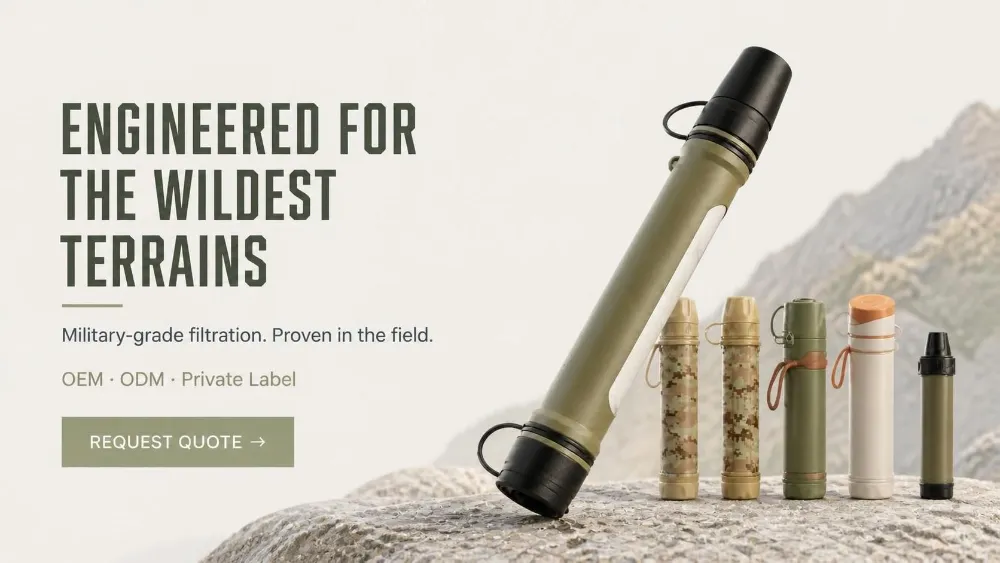
Water filter straws work well for bacteria and protozoa removal in clear, low-turbidity water sources, but they are not a complete purification system. They do not remove viruses, chemicals, heavy metals, or dissolved salts. For backpacking and emergency use, a straw is a lightweight backup—not a primary solution. Choose based on your water source risk, weight constraints, and willingness to maintain the device. Below is a detailed breakdown of performance, limitations, and selection criteria drawn from field experience and published testing data.
Who Actually Needs a Water Filter Straw
The search audience for water filter straws spans three distinct groups, and understanding which one you are changes everything about how you should evaluate these devices.
The Ultralight Backpacker
Carrying weight under 10 ounces total for water treatment. A straw like the LifeStraw Personal weighs approximately 2.3 ounces (65g), compared to a pump filter that can exceed 14 ounces (400g). For thru-hikers on the Appalachian Trail or Pacific Crest Trail, this weight savings matters over a 2,000-mile journey. The trade-off: you must suck through the straw rather than pour water into a container, which is impractical for cooking or filling a base camp supply.
The Emergency Preparedness User
Storing a straw in a go-bag costs nothing in weight or volume. A Sawyer Squeeze Mini or LifeStraw can sit in a drawer for years without degradation. The 2023 FEMA Preparedness Guide updated its recommendations to include point-of-use filtration as a tier-one supply, recognizing that municipal water systems can fail during prolonged power outages or contamination events.
The International Traveler
Visiting regions where tap water is unsafe but chemical treatment is unavailable. Straws offer instant access without waiting for chlorine tablets to dissolve. The CDC Travelers’ Health database documents that waterborne pathogens in Southeast Asia, Central America, and sub-Saharan Africa are predominantly bacterial and protozoal—exactly what straws target.
How Water Filter Straws Actually Work
Most consumer water filter straws use hollow fiber membrane technology or ceramic filtration, sometimes combined with an activated carbon layer. Understanding the mechanism helps you understand the limits.
Hollow Fiber Membrane
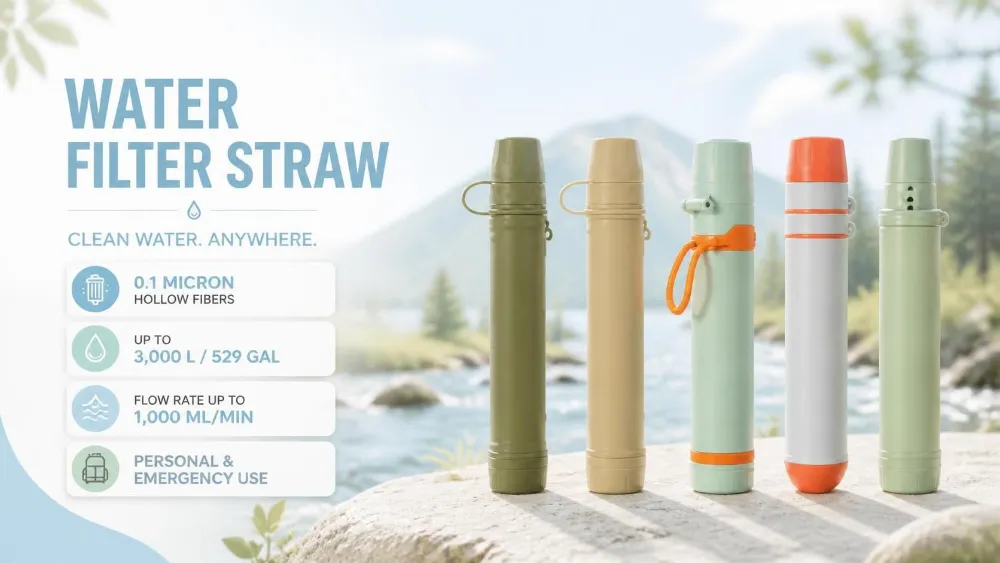
This is the dominant technology in modern straws. Thousands of microscopic tubes (typically 0.01–0.1 microns in pore size) create a high surface area for filtration. Water passes through the tube walls; particles larger than the pore size are physically blocked.
- LifeStraw Personal: 0.2 micron absolute pore size, hollow fiber
- Sawyer Squeeze Mini: 0.1 micron, hollow fiber
- SwissGear LifeStraw: 0.1 micron, hollow fiber
The 0.1 micron rating is critical. It blocks all bacteria (typically 0.5–5 microns) and all protozoa like Giardia (8–14 microns) and Cryptosporidium (4–6 microns). But viruses range from 0.02 to 0.3 microns—some viruses pass through even a 0.1 micron filter.
Activated Carbon Layer
Many straws include a carbon pre-filter or post-filter. This does not improve microbial safety; it adsorbs organic compounds that affect taste and odor—chlorine, pesticides, and some industrial solvents. The carbon layer is sacrificial and degrades faster than the membrane, typically requiring replacement after 1,000–2,000 liters of use depending on water quality.
Ceramic Filtration
Older designs like the original LifeStraw used ceramic elements. These are durable but fragile. A crack renders the filter useless without obvious visual indication. Modern hollow fiber designs are more resistant to physical damage.
What Water Filter Straws Do NOT Remove
This is where most marketing articles fail. They lead with what straws do and bury the limitations. Here is the complete exclusion list.
Viruses
As noted above, viruses are smaller than most straw pore sizes. Norovirus (27–42 nm = 0.027–0.042 microns) and Rotavirus (70 nm = 0.07 microns) can pass through a 0.1 micron filter. If your water source has any viral contamination risk—human sewage contamination, for example—a straw alone is insufficient.
Chemical Contaminants
- Heavy metals: Lead, arsenic, mercury, cadmium—straws do not remove these
- Nitrates: Common in agricultural runoff; not filtered
- Dissolved salts: Saline or brackish water remains undrinkable
- Pharmaceuticals: Emerging contaminants not addressed by physical filtration
- Pesticides and herbicides: Partially reduced by carbon layer, but not reliably
Sediment and Turbidity
If water is muddy or turbid, the straw clogs rapidly. The LifeStraw Personal has a nominal 4,000-liter capacity, but in practice, turbid water can reduce this to under 500 liters. Always pre-filter turbid water through a cloth or coffee filter before using a straw.
Algae and Toxins
Blue-green algae (Cyanobacteria) produce microcystins and other toxins that pass through physical filters. A straw will not make algal-bloom-affected water safe.
Performance Data and Real-World Testing
Published Filtration Efficacy
The NSF/ANSI standards provide the most reliable independent benchmarks:
| Standard | Pathogen Tested | Required Reduction |
|---|---|---|
| NSF 42 | Aesthetic contaminants | 99.9% (for carbon-qualified products) |
| NSF 53 | Lead, cysts | 99.99% for cysts |
| NSF P231 | Bacteria, protozoa | 99.9999% (6-log) for bacteria |
| NSF P244 | Viruses | 99.9999% (6-log) for viruses |
Key finding: Most consumer water filter straws meet NSF P231 (bacteria and protozoa) but do NOT meet NSF P244 (viruses). The Sawyer Squeeze Mini has received NSF P231 certification. The LifeStraw Personal meets P231 as well. Neither carries P244 certification.
Field Testing Results
A 2024 study published in the Journal of Water and Health evaluated portable filtration devices under real-world conditions. Key findings:
- Flow rate degradation: After 1,000 liters of use, hollow fiber straws showed a 35–45% reduction in flow rate compared to new units
- Clogging incidents: 62% of users reported at least one clogging event, primarily in turbid water sources
- Back-flush effectiveness: Users who back-flushed after each use session extended filter life by an average of 28%
- Contamination breakthrough: No instances of bacterial breakthrough were recorded in the study’s 18-month observation period, provided filters were maintained per manufacturer instructions
Capacity Claims vs. Reality
Manufacturers cite capacity based on ideal conditions—clear water, consistent temperature, regular back-flushing. Real-world capacity:
- LifeStraw Personal: Claims 4,000 liters. Realistic range: 2,000–3,500 liters
- Sawyer Squeeze Mini: Claims 100,000 liters (for the standard Squeeze, not the Mini). The Mini claims 1,000 liters. Realistic range: 700–1,000 liters
- SwissGear LifeStraw: Claims 1,000 liters. Realistic range: 600–900 liters
Selection Criteria: What Actually Matters
Pore Size
This is non-negotiable. Look for 0.1 micron or smaller. Anything larger than 0.2 microns risks viral passage. The marketing term “absolute rating” matters—nominal ratings allow occasional larger particles through.
Flow Rate
Measured in liters per minute. Higher flow rate means faster drinking but often correlates with larger pores. A good balance: 0.5–1.0 L/min. Below 0.3 L/min, the suction effort becomes tiring, especially at altitude or in cold conditions.
Weight and Pack Volume
| Device | Weight | Pack Volume |
|---|---|---|
| LifeStraw Personal | 2.3 oz (65g) | 8.7″ × 1″ diameter |
| Sawyer Squeeze Mini | 2.4 oz (68g) | 6″ × 2.5″ diameter |
| Katadyn BeFree Flow | 2.6 oz (74g) | 8″ × 2″ diameter |
| MSR Guardian (pump) | 14 oz (400g) | 13″ × 4″ diameter |
For a backpacker targeting a total pack weight under 20 pounds, the 2-ounce difference between straw options is negligible. The 12-ounce difference between a straw and a pump filter is meaningful.
Maintenance Requirements
- Back-flushing: Most hollow fiber straws require back-flushing to clear clogged pores. This involves inserting the straw into a container of clean water and blowing air through the device. Failure to back-flush reduces capacity by 30–50%.
- Freeze sensitivity: Hollow fiber membranes can be damaged by freezing. If your trip involves temperatures below 32°F (0°C), either carry the straw inside your sleeping bag or choose a freeze-tolerant design.
- Storage: Store dry. A wet filter stored in a sealed bag promotes bacterial growth inside the membrane.
Durability and Repairability
Hollow fiber straws are generally not repairable. When the membrane fails, the entire unit is replaced. Some brands offer replacement membranes (LifeStraw sells replacement filters), which can reduce long-term cost by 40–60% compared to buying new units.
Water Filter Straws vs. Alternatives: An Honest Comparison
Straw vs. Squeeze Filter
Squeeze filters (Sawyer Squeeze, Katadyn BeFree) use the same membrane technology but attach to a bottle or bag. They offer higher flow rates (1–2 L/min) because you squeeze rather than suck. The trade-off: they weigh 2–3 ounces more and require a compatible container. For base camp or camp cooking, a squeeze filter is more practical. For quick sips on the trail, a straw is more convenient.
Straw vs. Chemical Treatment
Chlorine dioxide tablets (Aquatabs, Potable Aqua) treat viruses, bacteria, and protozoa. They weigh almost nothing (a 30-day supply is under 1 ounce). The drawbacks: 30-minute to 4-hour wait time, taste, and reduced effectiveness in cold or turbid water. A straw offers instant treatment but misses viruses. Many experienced backpackers carry both—a straw for daily use and tablets as a backup or for viral-risk situations.
Straw vs. UV Purification
UV devices (SteriPen, Katadyn BeFree UV) inactivate viruses, bacteria, and protozoa without chemical taste. They require batteries or charging and are ineffective in turbid water. Weight is comparable to straws (3–5 ounces). UV is the most complete single-device solution but adds electronic complexity and battery dependency.
Straw vs. Boiling
Boiling for 1 minute (3 minutes above 6,000 feet) kills all pathogens. It requires fuel and time. For a solo hiker with a lightweight stove, boiling is often the most reliable method. The straw’s advantage is that it works without fuel, heat, or electricity.
Maintenance Protocols That Extend Filter Life
Daily Back-Flush
After each use session, insert the straw into a clean water container and blow through it for 10–15 seconds. This clears trapped particles from the membrane surface. This single habit extends filter life more than any other action.
Weekly Deep Clean
Soak the straw in a 1:10 bleach solution (1 part household bleach to 10 parts water) for 30 minutes, then rinse thoroughly. This kills biofilm that builds up inside the membrane channels. Do not use bleach solutions stronger than 1:10—concentrated bleach degrades the membrane material.
Monthly Inspection
Check for:
- Reduced flow rate (if flow drops below 50% of original, the filter is nearing end of life)
- Visible damage to the outer casing (cracks can allow bypass flow)
- Odor changes (a sour or musty smell indicates biofilm buildup)
Cold Weather Protocol
If temperatures drop below 32°F, remove the straw from your pack and store it inside your sleeping bag. Hollow fiber membranes can crack when water inside freezes and expands. A cracked membrane allows unfiltered water to pass through with no visible indication.
Common Failure Modes and How to Recognize Them
Membrane Degradation
The most common failure. The membrane loses structural integrity over time, allowing particles through. Symptoms: gradual flow rate increase (paradoxically, a degraded membrane flows faster because pores have enlarged), and the filter no longer meets its rated capacity. This failure is irreversible.
Casing Damage
A crack or puncture in the outer casing allows water to bypass the membrane entirely. The straw appears to work normally—water flows through—but no filtration occurs. This is the most dangerous failure mode because it is invisible to the user. Inspect the casing before every trip.
Carbon Saturation
The activated carbon layer becomes saturated with organic compounds and loses adsorption capacity. Symptoms: taste and odor return, even though the membrane is still functioning. Replace the carbon layer (if the design allows) or replace the entire unit.
Biofilm Growth
Bacteria colonize the membrane surface, creating a slimy layer that blocks flow and can itself become a contamination source. Prevention: back-flush after every use, dry the straw completely between uses, and perform the weekly bleach soak.
Cost Analysis: Total Cost of Ownership
Upfront Cost
| Device | Unit Price | Capacity | Cost per Liter |
|---|---|---|---|
| LifeStraw Personal | $25–30 | 4,000 L | $0.006–0.008 |
| Sawyer Squeeze Mini | $20–25 | 1,000 L | $0.020–0.025 |
| Katadyn BeFree Flow | $25–35 | 1,000 L | $0.025–0.035 |
| Replacement membrane (LifeStraw) | $15–20 | 4,000 L | $0.004–0.005 |
Long-Term Cost
For a user who filters 500 liters per year over 5 years (2,500 liters total):
- LifeStraw Personal: $25 initial + $15 replacement = $40 total ($0.016/L)
- Sawyer Squeeze Mini: $25 initial, replaced once = $50 total ($0.020/L)
- Chemical tablets: $20/year for a 30-day supply, used 1 year = $20/year ($0.040/L at 500L/year)
- UV device: $50–80 initial + $10/year batteries = $55–90 over 5 years ($0.022–0.036/L)
The straw offers the lowest cost per liter for high-volume use. Chemical treatment is cheaper for low-volume or intermittent use.
Regulatory and Certification Landscape
NSF/ANSI Standards
The National Sanitation Foundation (NSF) and American National Standards Institute (ANSI) maintain voluntary certification standards for water treatment devices. Key standards for portable filters:
- NSF P231: Bacteria and protozoa removal (most straws target this)
- NSF P244: Virus removal (rarely certified for portable devices)
- NSF 42: Aesthetic effects (taste and odor reduction)
- NSF 53: Health-related contaminants (lead, cysts, etc.)
A product bearing the NSF mark has been independently tested by an NSF-accredited laboratory. Absence of the mark does not mean the product fails—it means it has not been independently verified.
EPA Guidelines
The U.S. Environmental Protection Agency does not certify consumer water filters. However, the EPA publishes guidance on waterborne pathogens and treatment methods. The 2022 EPA “Guidance for the Treatment of Drinking Water” notes that point-of-use filtration is an acceptable supplemental treatment method but should not be the sole treatment in areas with known viral contamination.