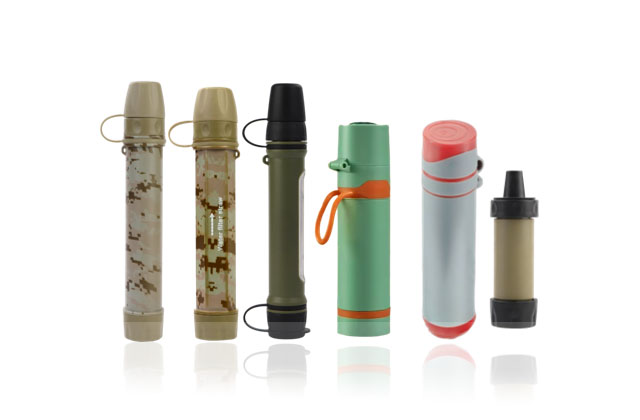
If you are looking for a way to stop buying hundreds of plastic bottles every year while simultaneously improving the taste of the water you consume, you are likely overwhelmed by the conflicting marketing claims surrounding portable filtration. Most consumers search for “indoor water bottle filtration” not to set up a whole-house system, but to find a reliable, portable solution that fits into their daily routine, whether they are heading to the gym, the office, or a hiking trail. The core intent here is practical: you want clean, safe, and great-tasting water without the cost or hassle of single-use plastics.
This guide breaks down how portable bottle filtration actually works, compares the major technologies, and provides the specific metrics you need to verify before you make a purchase. We focus on what matters for daily indoor use: filtration efficiency, maintenance costs, and real-world performance in municipal water systems.
How Portable Bottle Filtration Works
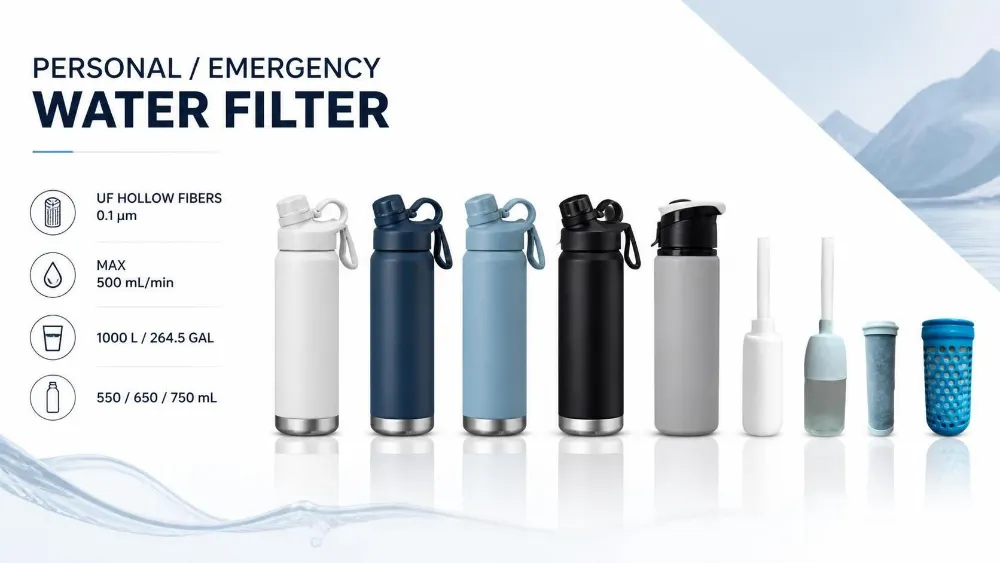
To understand which bottle is right for you, you must first understand the filtration mechanism. Most indoor water bottle filters rely on three primary layers working in tandem.
- Activated Carbon (Granular or Block): This is the backbone of most consumer bottles. It adsorbs chlorine, chloramines, and organic compounds that affect taste and odor. It does not remove bacteria or viruses. Its effectiveness is measured in “carbon equivalent” weight; more carbon generally equals better taste improvement and longer lifespan.
- Ion Exchange Resin: Often found in premium bottles, this resin neutralizes heavy metals like lead and mercury. It works by swapping harmful ions in the water for harmless sodium or hydrogen ions. This layer is critical if you live in an older building with outdated plumbing.
- Hollow Fiber Membrane: This is a physical barrier with pores sized at 0.001 to 0.2 microns. It physically blocks bacteria, cysts, and protozoa. If your water source is tap water in a developed country, this layer is a bonus for peace of mind, though not strictly necessary for taste improvement.
Key Specifications to Check Before Buying
When browsing manufacturers, ignore vague claims about “ultimate purity.” Instead, look for these specific technical parameters. These are the standards that define a professional-grade filtration unit:
- NSF/ANSI Certification: Look for certification to NSF 42 (aesthetic effects – taste and odor) and NSF 53 (health effects – reduction of specific contaminants like lead, arsenic, and PFOA). Without this, the manufacturer’s claims are unverified marketing.
- Flow Rate: Typically measured in liters per hour (LPH) or minutes to fill. For a standard 1-liter bottle, a healthy flow rate is 3–5 minutes. If it takes longer than 10 minutes, the membrane is too restrictive for daily indoor use.
- Filtration Capacity: Most carbon cores last for 100 to 300 gallons (approx. 380 to 1,135 liters). You must know this number to calculate your cost-per-liter. A core that filters 1,000 liters for $20 is significantly cheaper than one that filters 100 liters for $15.
- Micron Rating: For bacterial protection, you need 0.2-micron or smaller. Standard carbon blocks are “unrated” for bacteria, so if you require potable safety beyond taste improvement, ensure the bottle includes a membrane filter.
- Weight and Form Factor: Portable bottles should weigh under 500 grams (including the empty vessel and filter core) to be viable for daily commuting.
Comparison of Major Filtration Technologies
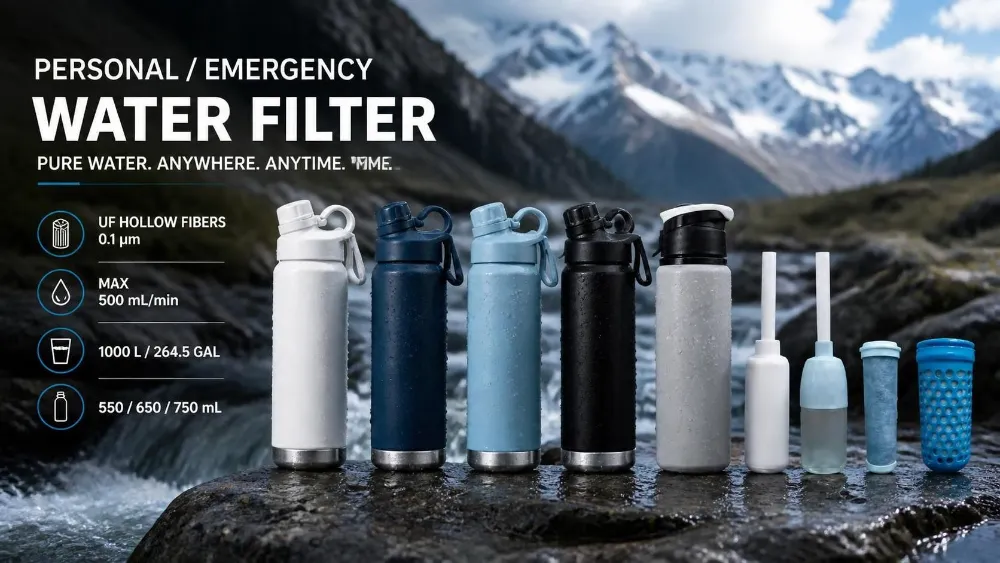
Not all filtration is equal. The table below contrasts the three most common types of indoor bottle filtration systems so you can match the technology to your specific water quality concerns.
| Feature | Block Carbon Filter | Multi-Stage (Carbon + Membrane) | UV-C Bottle |
|---|---|---|---|
| Primary Goal | Improve taste/odor; remove chlorine | Remove bacteria + improve taste | Sterilize water; kill 99.9% pathogens |
| Removes Bacteria? | No | Yes (via physical barrier) | Yes (via light sterilization) |
| Removes Heavy Metals? | No (unless specialized resin added) | Often Yes (if resin included) | No |
| Maintenance | Replace core every 6–12 months | Replace core every 6–12 months | Battery recharge/replace; wick replacement |
| Best For | Urban tap water; office/gym use | Older plumbing; travel; general safety | Hiking; emergency backup; unfiltered sources |
| Cost Per Liter (Est.) | Low ($0.02 – $0.05) | Moderate ($0.05 – $0.08) | Low (electricity) / High (initial hardware) |
Note: UV-C bottles are excellent for safety in the wild, but for indoor use, the multi-stage carbon + membrane system is superior because it also improves the taste of tap water, which UV-C does not address.
Optimizing Performance: Best Practices
Even the best filtration system will fail if not used correctly. To maximize the lifespan of your indoor water bottle filter, adhere to these operational protocols:
- Pre-Filtration: If you are using well water or water from a very old municipal system, do not pour high-turbidity water directly into a carbon core. It will clog the pores instantly. Use a pre-filter mesh or settle the water first.
- Temperature Limits: Never use boiling water in most portable carbon filters. High temperatures can warp the plastic housing and degrade the resin. Most manufacturers specify a maximum of 85°C (185°F). For hot water, use a heat-resistant bottle without filtration, or let the water cool.
- The “Flush” Rule: After a long period of non-use (more than 2 weeks), run 3–5 bottles of water through the filter before drinking. This flushes out any stagnation and re-activates the carbon adsorption sites.
- Replacement Schedule: Do not rely on taste to determine when to replace the filter. A carbon block can stop improving taste long before it stops removing contaminants. Mark your calendar for replacement based on the gallon capacity stated on the packaging.
Common Objections and Realistic Expectations
Many users believe that a water bottle filter will make all water safe to drink. This is a dangerous misconception.
- It is not a life-support device: While NSF 53 certified filters reduce specific contaminants, they do not guarantee the removal of all pathogens. For indoor municipal water, they are excellent for taste and heavy metal reduction. For untreated surface water (lakes, rivers), you need a combination of 0.1-micron filtration and UV-C treatment.
- Cost Comparison: People often say, “I’ll just buy distilled water.” Let’s do the math. A 12-pack of 16.9-oz water bottles costs roughly $3.00, yielding about 6.4 liters. That is $0.47 per liter. A good filtration core costs $15 and lasts 1,000 liters. That is $0.015 per liter. In 6 months, you will save over $200 on a single bottle, not counting the environmental waste reduction.
- Taste Preferences: Some users dislike the “clean” taste of filtered water because they are accustomed to the slight mineral bite of hard tap water. If this is an issue, look for a bottle with adjustable resin, or simply mix filtered water with a small amount of your preferred hard water for a balanced mineral profile.

FAQ
How long does a water bottle filter last? The lifespan depends entirely on usage volume and local water quality, not just time. A standard carbon core is rated for 100 to 1,000 gallons (380 to 3,785 liters). If you drink 1 liter per day, a high-capacity core (1,000 liters) will last nearly three years. A low-capacity core (100 liters) will last about three months. Always check the “rated capacity” on the packaging.
Can I use these filters to remove bacteria from tap water? Standard carbon-only filters cannot remove bacteria; they only improve taste and remove chlorine. To remove bacteria, cysts, and protozoa, you must purchase a bottle with a hollow fiber membrane rated at 0.2 microns or smaller. If you have a healthy immune system and drink from a certified municipal water source, carbon-only is sufficient for taste and lead reduction. If you are immunocompromised or traveling, opt for the membrane-filtered version.
Does filtered water taste different from regular tap water? Yes, significantly. The removal of chlorine and chloramines usually results in a “smoother” flavor profile. Many users find that coffee, tea, and juice taste better when made with filtered water because there are fewer organic compounds to interfere with the extraction process. If the water tastes “flat,” it is because you have removed the minerals that contributed to the metallic or chemical bite, not because the water is of low quality.
Is it safe to drink water immediately after filtering it through a new core? No. New carbon cores contain fine carbon dust that can leach into the first few batches of water. You must rinse the new filter under clean running water for at least 5 minutes, or fill and empty the bottle three times before consuming the water. This “breaking-in” process is standard for all activated carbon filtration systems.
Take the Next Step
Stop settling for compromised taste or paying for unnecessary waste. Identify your specific water quality needs—whether it’s heavy metal reduction from older plumbing or simple chlorine removal for better taste—and select a portable system with verified NSF 42 and 53 certification. To find the specific filtration core that matches your local water report, contact our technical team today for a free water analysis and a customized filtration recommendation. We will provide you with a quote for a system calibrated to your household’s consumption rate, ensuring you get the longest lifespan and the cleanest water possible. Request your consultation now.